Y2K Photo Booth Aesthetic: How to Get the Vintage Film Strip Look for Free
Create the Y2K photo booth aesthetic with a simple four-frame layout, soft details, subtle grain, and natural early-2000s colors. Learn how to recreate the vintage film strip look for free using digital photos.
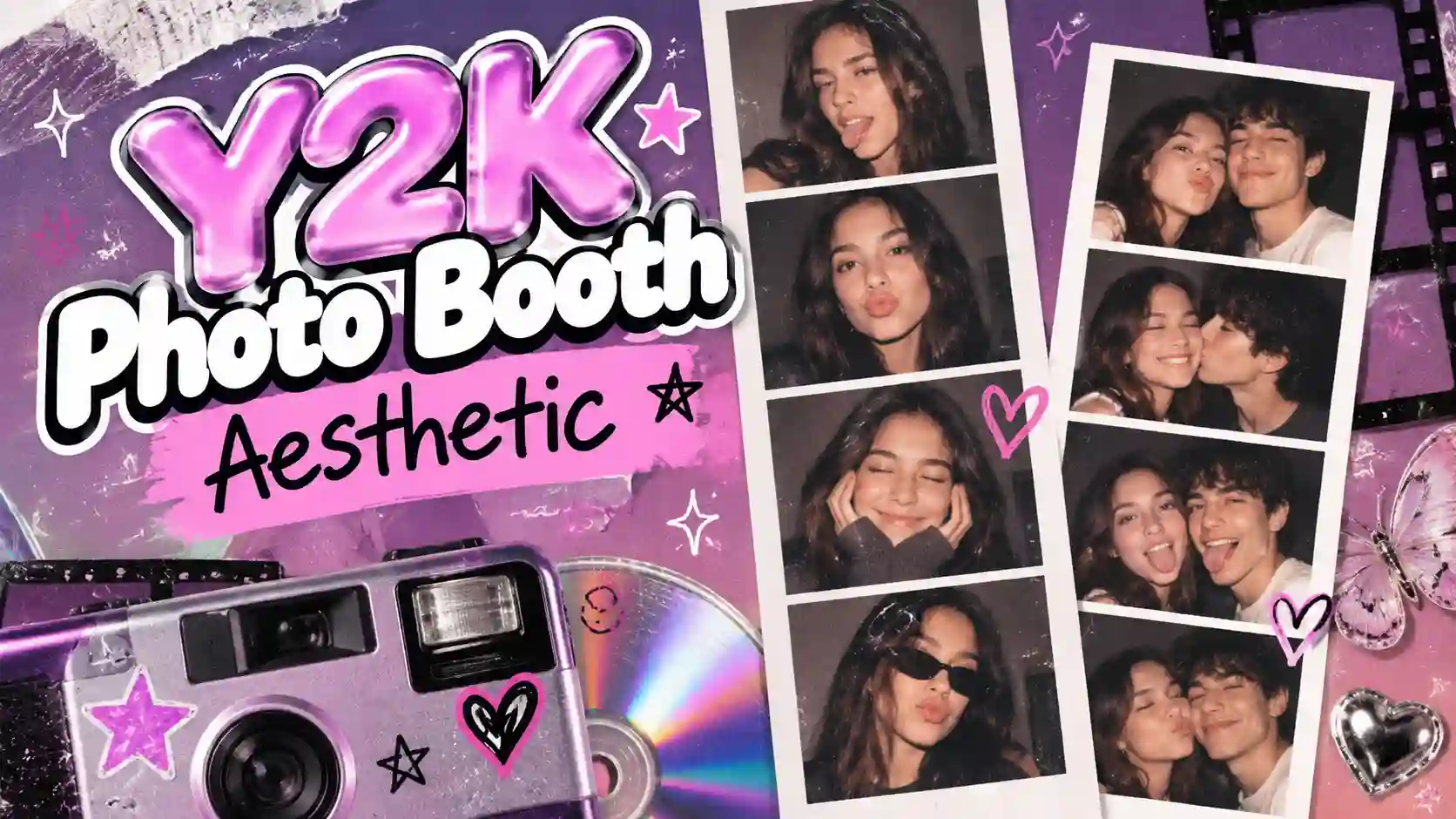
Old photo strips have a look that is hard to recreate with a modern phone camera. The photos feel softer, the flash looks more direct, and the expressions seem less planned than the polished pictures we see today. That imperfect feeling is a big part of the Y2K photo booth aesthetic. It brings together the four-frame strip, casual expressions, soft image quality, and slightly faded colors associated with early-2000s photo booths. The best part is that you do not need an old camera, expensive film, or a physical booth. You can recreate the Y2K photo booth aesthetic with a phone, webcam, or even four existing photos. A simple photobooth setup can give you the right starting point. The key is using the right layout and keeping the editing subtle enough to make the final strip feel natural.
What Is the Y2K Photo Booth Aesthetic?
The Y2K photo booth aesthetic refers to a photo style inspired by the casual picture strips associated with the late 1990s and early 2000s. Its identity comes from the way the photographs are captured and presented, rather than from one specific filter or editing preset. A typical strip places four small photographs in a narrow vertical layout. The images often use close framing, direct-looking lighting, soft detail, and mild imperfections that keep them from looking like highly edited digital portraits.
What makes the style recognizable is the combination of these details. The photographs can look slightly faded or grainy, but they should still retain natural skin tones and clear facial expressions. The aim is to recreate the character of an old photo strip, not to make a modern image look heavily damaged. The four frames also matter because they create a small visual sequence. Each picture can capture a different expression or movement while keeping the same setting and overall composition.
The Classic 4-Cut Photo Strip
The four-cut layout gives the finished image its unmistakable photo-booth structure. Instead of presenting one large photograph, the final design uses four separate frames stacked into a single narrow strip. The frames should work together as a small sequence. You can change your expression, tilt your head, shift your position, or move slightly closer with each shot. The goal is to make the four pictures feel like they were captured within the same short moment.
Soft Detail Without Losing Clarity
The editing should take away some of the overly sharp digital look without making the photos unclear. A small reduction in sharpness can soften fine details while keeping faces and expressions easy to see. This works better than adding a strong vintage filter. The finished photos should still look like real pictures, just with a less polished digital texture.
Direct Light, Close Crops, and Gentle Color
Lighting plays an important role in creating the casual booth feel. A front-facing light source can give the face an even, slightly flat appearance instead of the dramatic shadows common in portrait photography. Keep the camera fairly close to the subject and avoid leaving too much space around the body. This creates the tight framing that works naturally with a narrow photo strip. For color, make small adjustments rather than completely changing the image. Slightly lower contrast, softer highlights, or a mild reduction in saturation can give the photos a more aged appearance without making them look artificially retro.
Why Y2K Photo Strips Are Trending Again
Y2K photo strips are having a moment again because they feel different from the perfectly polished photos we see everywhere today. Their soft quality, awkward poses, and imperfect expressions create a sense of realness that modern editing often removes. For younger audiences, the appeal is not always about remembering the early 2000s. It is about imagining a time when photos were taken to keep a memory, not to build a perfect online image. That feeling works especially well on social media, where four-cut strips can appear in Instagram posts, TikTok videos, Pinterest pins, and story layouts. The vertical format is easy to share, while the sequence of expressions makes even a simple photo feel like a small story.
What Makes a Y2K Photo Strip Look Authentic?
A convincing Y2K strip is less about heavy filters and more about getting several small details right. The photos should feel casual, slightly imperfect, and connected without looking heavily edited.
Four Connected Frames
The four photographs should feel like they came from the same short moment. Small changes between the frames add personality without making the strip feel random.
Direct, Simple Lighting
A bright front-facing light gives the photos a casual booth-like appearance. Keep the lighting simple because dramatic shadows can make the images feel more like professional portraits.
Soft Digital Detail
Modern cameras can make photos look extremely sharp and polished. A little softness helps reduce that digital appearance while keeping faces and expressions clear.
Subtle Texture
A small amount of grain can break up the clean digital surface of a photograph. It should stay in the background rather than becoming the main visual effect.
Natural Color
The colors can look slightly softer than a modern edited photograph, but they should still feel believable. Avoid strong yellow, brown, or faded tones that make the image look like a generic vintage preset.
Close Framing
A tighter crop keeps attention on the people and works naturally with the narrow strip format. Too much empty background can make the photographs feel more like ordinary portraits.
How to Recreate the Y2K Photo Booth Look for Free
The setup is simple: create four photos, put them into a photo strip layout, and give the final set a Y2K-inspired finish. You can use a phone, webcam, or existing digital photographs without buying a vintage camera or physical photo booth.
Step 1: Choose the 4-Cut Strip Layout
Select a four-photo vertical layout with the frames stacked from top to bottom. Keep the spacing simple so the finished design has the familiar photo-strip shape.
Step 2: Choose the Right Photo Style
Try different available styles until you find one that matches the mood you want. For a Y2K-inspired result, look for a softer and slightly imperfect appearance rather than an extreme retro effect.
Step 3: Get the Poses Right
The four frames should show different moments instead of four identical selfies:
- Frame 1: Natural smile or relaxed expression
- Frame 2: Playful face or simple hand gesture
- Frame 3: Look away or turn slightly to the side
- Frame 4: Move closer or finish with a genuine smile
Small changes between the frames make the final strip feel spontaneous and personal. Once the four frames look right together, save the finished strip and share it as a digital photo or printable keepsake.
Y2K Outfit and Prop Ideas for the Photo Strip
The photographs themselves are the main focus, but clothing and small details can strengthen the early-2000s feeling.
Clothing
Simple Y2K-inspired clothing can work well because it is easy to recognize in a small photograph. Baby tees, colorful tops, denim, tracksuits, and other early-2000s-inspired pieces can add character without requiring a complicated setup. You do not need a complete themed outfit. One recognizable detail can be enough.
Accessories
Small accessories can make the photographs feel more connected to the era. Sunglasses, butterfly clips, colorful hair accessories, small bags, and simple jewelry can work well. Keep the accessories secondary to the photographs. Too many objects can make the small frames look crowded.
Makeup
The makeup should support the overall look rather than dominate the image. Glossy lips, simple eye makeup, or other Y2K-inspired details can show up nicely in close framing. The important part is keeping the final photograph natural enough to still resemble a casual photo booth picture.
Simple Props
If you want to add a prop, choose something small that fits comfortably inside the frame. A pair of sunglasses, a small accessory, or another recognizable Y2K detail can work better than a large object that covers the subject.
Common Mistakes That Make a Y2K Photo Strip Look Fake
The Y2K look can become less convincing when the editing starts doing too much. A few common mistakes can quickly make the strip look like a generic retro filter.
Using Too Many Vintage Effects
Grain, scratches, light leaks, faded colors, and heavy filters do not all need to appear together. Too many effects can make the editing obvious and take away from the natural photo-booth feeling.
Making the Photos Look Too Old
The goal is an early-2000s photo style, not a damaged photograph from decades ago. Strong sepia, deep fading, or excessive texture can push the result toward a completely different vintage aesthetic.
Over-Retouching the Photos
Perfectly smooth skin and heavily edited faces can remove the casual character of the strip. Keep natural details visible so the photographs still feel spontaneous.
Changing the Look Between Frames
All four photographs should belong to the same strip, so avoid giving each frame a completely different treatment. Consistent lighting, color, and editing will make the final result feel much more authentic.
Using the Wrong Layout
A Y2K photo strip should not look like a standard photo grid or Polaroid collage. Keep the four frames together in a simple vertical strip with consistent spacing and proportions.
Y2K Photo Booth vs. Buying an Instax
If you want the look rather than the physical camera experience, a digital photo strip is much easier to create.
| Digital Y2K Photo Strip | Instax |
|---|---|
| Can be created without buying a camera | Requires an Instax camera |
| Can be edited before saving | Prints the captured image |
| Easy to share online | Gives you a physical photograph |
| Four images can form one strip | Usually produces individual prints |
| No film is needed | Requires Instax film |
An Instax makes sense when you specifically want physical instant photographs. A digital strip is more flexible when your main goal is the Y2K photo booth aesthetic, and you want to edit, save, or share the result.
How to Create a Y2K Photo Strip From Existing Photos
You do not need to take four new photos if you already have suitable pictures on your phone. Pick four casual images that have a similar mood, then crop them so they work naturally together. Apply the same basic editing to all four photos instead of giving each one a different look. A little softness, subtle grain, and gentle color adjustment can help bring the images closer together. Once they are ready, place the four photos into a vertical strip with even spacing. This is an easy way to turn existing selfies or casual pictures into a Y2K-style photo booth strip without taking new photos.
If you want to create a booth-style image specifically for Instagram, our guide to an Instagram photo booth explains how the format can work for social sharing.
How to Share Y2K Photo Strips on Social Media
A finished photo strip can work well as a single image because viewers can see the entire sequence at once.
TikTok
You can use the strip as a visual in a short video, slideshow, or transition. Keep the entire strip visible so the four-frame sequence remains clear.
A vertical strip can work as a post or story. If the original strip is narrow, leave enough surrounding space so the photographs do not feel cramped.
Pinterest works well for visual references, so a clean vertical strip can show the aesthetic clearly. Use a simple title that describes the image rather than filling the graphic with text.
How Does an Online Photo Booth Work?
A browser-based photo booth can make the process easier when you do not want to install software or use a physical booth. If you want to understand the basic process, our guide on what an online photo booth is and how it works explains the main steps and features.
Frequently Asked Questions
What is the Y2K photo booth aesthetic?
The Y2K photo booth aesthetic is an early-2000s-inspired look built around narrow photo strips, casual expressions, direct-looking lighting, soft detail, subtle grain, and slightly imperfect colors.
How do I make a Y2K photo strip for free?
Capture four photos, give them a subtle Y2K-style treatment, arrange them vertically, and export the finished strip. You can do the process digitally without buying a film camera.
How many photos are in a Y2K photo strip?
Four photographs are a common choice for the classic four-cut appearance. The important part is that the images form one connected vertical sequence.
What filter makes photos look Y2K?
There is no single filter that defines the style. A good treatment usually combines softer contrast, mild color fading, subtle grain, and slightly reduced digital sharpness.
Can I make a Y2K photo strip without a film camera?
Yes. You can use a phone, webcam, or existing digital photographs and recreate the visual characteristics through simple editing and a four-frame layout.
Can I make a Y2K strip from existing photos?
Yes. Choose four photographs with similar lighting and framing, apply a consistent treatment, and arrange them into one vertical strip.
What size should a photo booth strip be?
A 2 × 6-inch strip is a common format, and 600 × 1800 pixels works for a 300-DPI digital canvas. For online sharing, you can also choose dimensions that suit the platform where the strip will be displayed.
Why does my Y2K filter look fake?
The most common reason is using too many effects. Heavy grain, extreme blur, strong sepia, excessive scratches, and unnatural colors can make the editing obvious.
How do I make film grain look natural?
Use a small amount of grain and keep the original facial details visible. The texture should support the photograph rather than become the main thing you notice.
Final Thoughts
You do not need an old camera to recreate the Y2K photo booth aesthetic. The recognizable look comes from several small choices working together: four connected frames, close framing, simple lighting, soft detail, subtle grain, and restrained color editing. Start with the photographs rather than the filter. If the lighting, expressions, and framing already feel like a casual photo booth session, the final editing becomes much easier, and the finished strip can have that imperfect early-2000s character without looking artificially aged.
Ready to try this in your browser?
Launch our free 3D studio, test out vintage filters, and save your photo strip instantly.